
























Private Label vs OEM Coffee Capsules: What’s the Practical Difference
A buyer says they need private label coffee capsules. Another asks for OEM. A third uses both terms in the same email to describe exactly

A coffee capsule can look perfect on the outside and still fail where it matters most.
The color may be consistent. The printing may be sharp. The dimensions may be within tolerance. But if the seal is not reliable, none of that really matters. A small leak that is almost impossible to see can gradually affect coffee quality long before the consumer brews the first cup.
For coffee brands, leak testing isn’t simply another quality control step. It’s one of the last opportunities to make sure every capsule leaving the factory performs as intended.
Roasted coffee is sensitive to oxygen and moisture. Once coffee has been ground, the surface area increases dramatically, making oxidation happen much faster than it does with whole beans.
Research summarized by the Specialty Coffee Association (SCA) and Espresso Coffee: The Science of Quality shows that roasted coffee contains more than 800 volatile aroma compounds. Many of these compounds are easily affected by oxygen, which is why coffee packaging focuses so heavily on sealing performance.
Even if a production line uses nitrogen flushing before sealing, the package still needs to remain airtight during storage, transportation, and retail display. If air slowly enters the capsule over time, the benefits of nitrogen flushing are gradually reduced.
Not every leak is immediately visible.
Sometimes the lid appears perfectly sealed, but tiny gaps can develop because of sealing temperature, pressure, capsule dimensions, or contamination on the sealing surface. These issues may only become apparent weeks later.
A leaking capsule may lead to several problems. Coffee freshness can decline faster. Capsules may lose internal pressure. During brewing, extraction can become inconsistent, and in some cases water may flow around the seal instead of through the coffee bed.
If products are already on supermarket shelves when these problems appear, the cost is no longer just about replacing capsules. It may involve customer complaints, product recalls, and damage to brand reputation.
Modern coffee capsule production is built around consistency.
A filling line may produce thousands of capsules every hour. Even if the defect rate is very low, small sealing problems can still result in a significant number of affected capsules over an entire production run.
For this reason, many manufacturers include leak testing as part of routine quality control rather than relying only on visual inspection. Depending on the production process, testing methods may include vacuum testing, pressure testing, burst testing, or sampling inspections during production.
The goal isn’t to prove that one capsule is sealed. It’s to verify that the production process remains stable.
Another reason sealing matters is the brewing process itself.
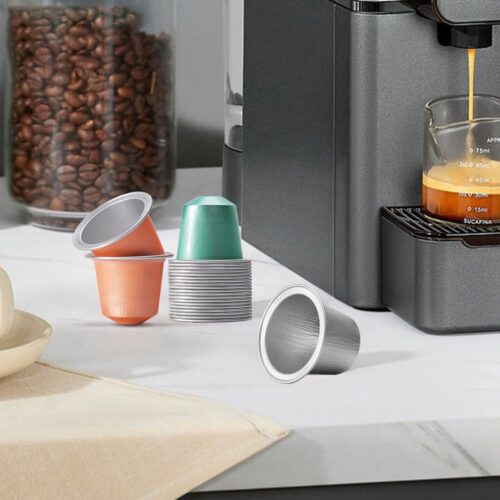
Many espresso capsule systems are designed to brew coffee under high pressure. For example, Nespresso® Original machines are designed to operate at up to 19 bar during extraction. This pressure is one of the reasons capsule coffee can produce a rich crema and concentrated flavor.
However, high brewing pressure also places greater demands on the capsule and its seal. If the seal is inconsistent, extraction performance may vary from cup to cup.
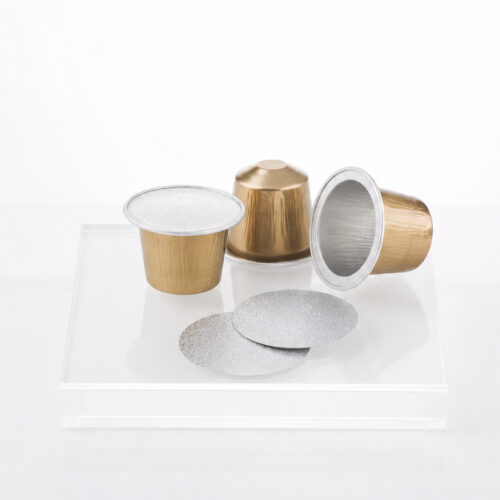
This is why manufacturers evaluate not only the capsule body but also the compatibility between the capsule, the lidding foil, and the sealing process.

Leak testing should never be viewed as a way to “fix” production problems.
A reliable seal begins with consistent capsule dimensions, stable raw materials, clean sealing surfaces, properly matched lidding foil, and controlled sealing parameters. Leak testing simply confirms that everything is working together as expected.
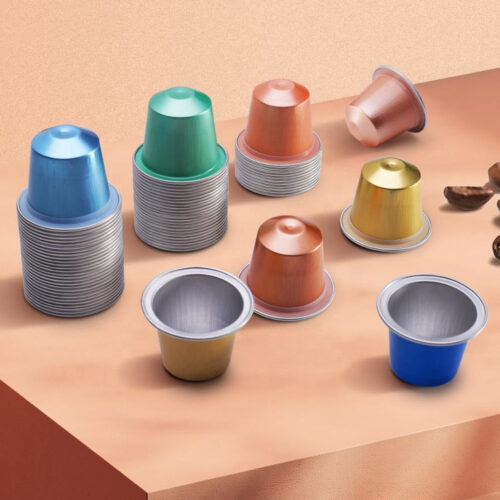
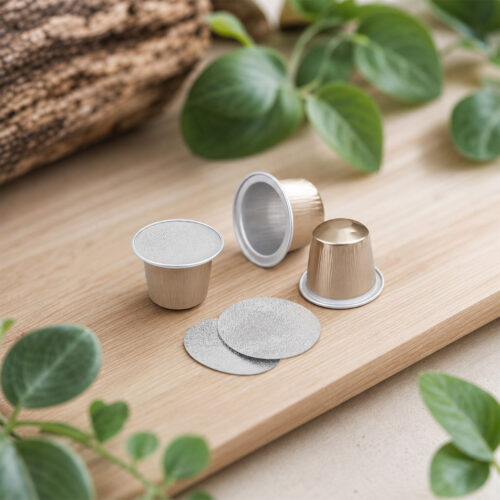
For coffee brands sourcing empty aluminum coffee capsules, it’s worth asking suppliers how sealing performance is verified during production. The answer often says more about a manufacturer’s quality system than a product brochure ever can.
Coffee freshness depends on many factors, but without a reliable seal, even the best coffee and the best packaging material cannot deliver their full value.
Leak testing helps manufacturers verify that every capsule has the opportunity to perform consistently throughout storage, transportation, and brewing. For coffee brands, that means better product quality, fewer complaints, and greater confidence that consumers will enjoy every cup as intended.

Spécialiste de la fabrication de capsules de café · Kervoo
Depuis 2024
A buyer says they need private label coffee capsules. Another asks for OEM. A third uses both terms in the same email to describe exactly
A perfect sample is reassuring. It looks right. The color is right. It drops into the machine smoothly and brews without leaking. Put ten more

A Good Presentation Is Not the Same as Good Evidence. A supplier’s website, catalog and sales presentation are useful starting points. They can tell you