
























Private Label vs OEM Coffee Capsules: What’s the Practical Difference
A buyer says they need private label coffee capsules. Another asks for OEM. A third uses both terms in the same email to describe exactly

Freshness is one of the biggest reasons consumers are willing to pay more for premium coffee. Long before a customer notices that a coffee tastes flat, subtle changes have already taken place inside the capsule. Aroma compounds begin to disappear, delicate flavor notes become less distinct, and the overall cup gradually loses complexity.
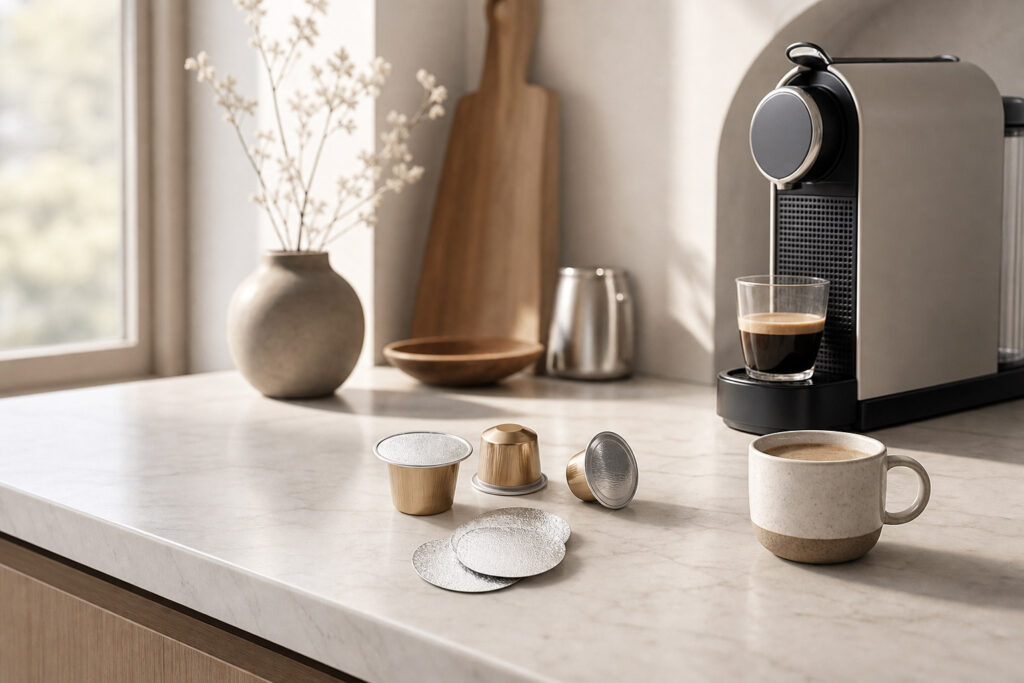
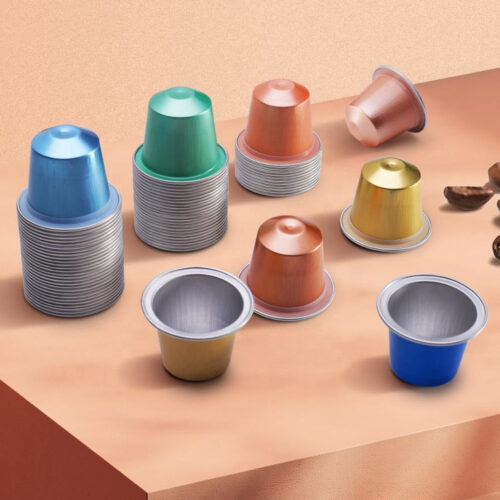
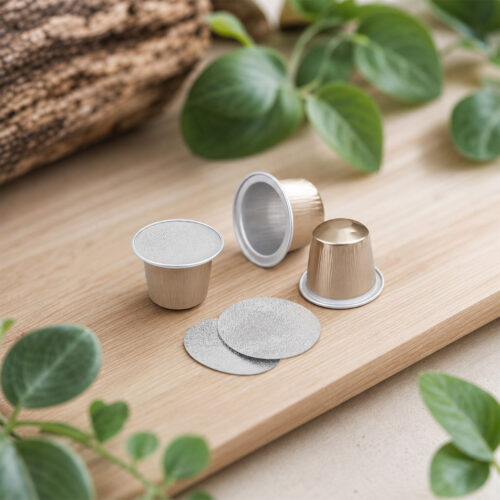
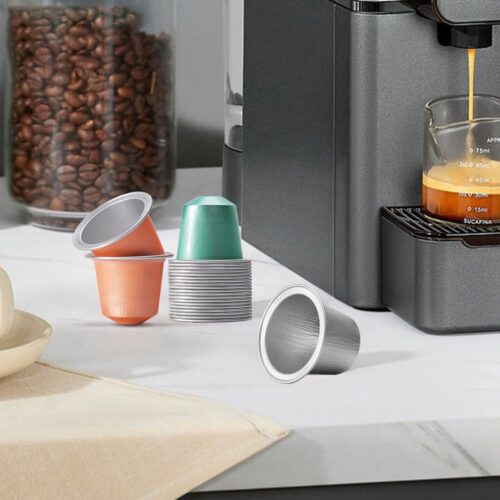
For coffee brands, maintaining freshness is about much more than extending shelf life. It is about protecting the work that has already gone into sourcing green coffee, roasting, blending, and grinding. Once the coffee is filled into a capsule, the packaging becomes the final layer of protection. This is one of the main reasons aluminum capsules continue to be widely used in premium coffee applications.
Roasting gives coffee its aroma, but grinding also makes coffee much more vulnerable to the surrounding environment. Scientists have identified more than 800 volatile aroma compounds in roasted coffee, according to research summarized in Espresso Coffee: The Science of Quality by Andrea Illy and Rinantonio Viani. These compounds create the floral, fruity, chocolate, caramel, and roasted notes that consumers associate with freshly brewed coffee.
The challenge is that many of these compounds are highly unstable. Once coffee is ground, its surface area increases dramatically, allowing oxygen to react with aromatic compounds much faster than it would in whole beans. The Specialty Coffee Association (SCA) also notes that oxygen, moisture, temperature, and storage conditions all influence roasted coffee quality during storage. In other words, coffee doesn’t suddenly become stale—it slowly loses its best characteristics over time.
Many people associate fresh capsule coffee with nitrogen flushing, and it is indeed an important step in commercial production. Before sealing, many manufacturers replace part of the air inside the capsule with nitrogen to reduce the amount of oxygen surrounding the ground coffee. Lower oxygen levels generally help slow oxidation.
However, reducing oxygen during filling is only half the story. Once the capsule leaves the production line, the packaging must continue protecting the coffee throughout transportation, warehousing, retail display, and storage in the consumer’s home. If oxygen gradually enters the package because of poor sealing or inadequate barrier performance, the benefits of nitrogen flushing can be reduced over time.
This is why experienced coffee manufacturers pay attention not only to filling technology but also to the complete packaging system, including the capsule, the lidding foil, sealing conditions, and quality control.

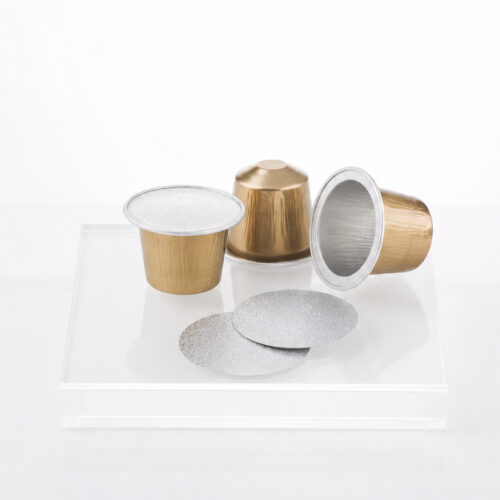
Among the materials used for coffee capsules, aluminum remains one of the most widely used in the premium segment because of its barrier performance.
According to European Aluminium, aluminum provides an effective barrier against oxygen, moisture, light, and other external contaminants when used correctly in food packaging. In packaging science, aluminum foil is also recognized as having an oxygen transmission rate (OTR) that is close to zero when the material remains intact. This means that, under appropriate manufacturing and sealing conditions, very little oxygen can pass through the material itself.
For roasted coffee, that matters. Every additional barrier against oxygen helps preserve the volatile compounds responsible for aroma and flavor. While packaging cannot stop coffee from naturally ageing, it can significantly reduce the speed at which external factors affect product quality.
Even the best material cannot compensate for inconsistent manufacturing. If capsule dimensions vary from batch to batch, or if sealing parameters are not properly controlled, the overall packaging performance may be compromised.
This is one reason experienced coffee brands often evaluate manufacturers rather than products alone. They look at production consistency, tooling precision, sealing performance, food-contact compliance, and the manufacturer’s ability to support automated filling lines. These factors directly influence how well the finished capsule performs throughout its shelf life.
In practice, coffee freshness is the result of many small details working together. High-quality coffee, accurate filling, reliable sealing, suitable storage, and effective packaging all contribute to the final cup.
Aluminum coffee capsules have become a preferred packaging solution for many premium coffee brands not because aluminum is the only material available, but because it combines excellent barrier properties with reliable performance in commercial production. When integrated into a well-designed packaging system, aluminum helps protect the aroma and flavor consumers expect from freshly roasted coffee.
For coffee brands, preserving freshness begins long before the consumer brews the first cup. It starts with choosing the right manufacturing process, the right packaging system, and the right production partner.

Specijalist za proizvodnju kapsula za kavu · Kervoo
Od 2024.
A buyer says they need private label coffee capsules. Another asks for OEM. A third uses both terms in the same email to describe exactly
A perfect sample is reassuring. It looks right. The color is right. It drops into the machine smoothly and brews without leaking. Put ten more

Dobra prezentacija nije isto što i dobri dokazi. Web stranica, katalog i prodajna prezentacija dobavljača korisne su polazne točke. Mogu vam reći