
























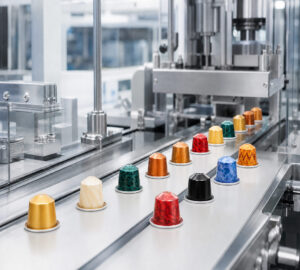
Private Label vs OEM Coffee Capsules: What’s the Practical Difference
A buyer says they need private label coffee capsules. Another asks for OEM. A third uses both terms in the same email to describe exactly
For coffee brands, choosing a capsule material is no longer just a packaging decision. It has become part of product positioning, supply chain planning, and long-term brand strategy. As the global coffee market evolves, aluminum coffee capsules have gained increasing attention from roasters, private label brands, and importers looking to deliver premium products while maintaining product consistency.

Rather than replacing every other packaging format, aluminum capsules have found their place in a market where freshness, convenience, and product presentation matter more than ever. Understanding why this shift is happening requires looking beyond the capsule itself and examining broader changes in coffee consumption.
Coffee continues to be one of the most widely consumed beverages in the world. According to the International Coffee Organization (ICO), global coffee consumption has shown long-term growth, supported by increasing demand across both traditional coffee-drinking countries and emerging markets.
The ICO also reports that world coffee production and consumption have both increased over the past decade, although annual harvests may fluctuate due to weather conditions and agricultural cycles. Overall, coffee remains a resilient global industry supported by strong consumer demand.
This steady demand provides a favorable environment for value-added coffee products, including capsules, specialty coffee, and premium packaging solutions.
Coffee consumption is no longer limited to cafés. Consumers increasingly expect café-quality beverages at home, in offices, and while traveling.
According to the National Coffee Association (NCA) in the United States, coffee remains one of the country’s most popular beverages, and home coffee preparation continues to represent a significant share of daily consumption.
As lifestyles become busier, consumers are looking for brewing methods that balance convenience with consistent quality. This trend has supported the continued development of single-serve coffee systems.
Instead of grinding coffee beans and measuring doses every morning, many consumers prefer capsule systems that deliver predictable results with minimal preparation.
The popularity of capsule coffee is closely linked to changes in consumer expectations. Today’s buyers value consistency almost as much as flavor.
Whether purchasing coffee from a supermarket or an online retailer, customers expect each cup to deliver a similar experience. Capsule systems help reduce variables such as dosing, brewing pressure, and extraction time, making repeatability easier to achieve.
For coffee brands, this consistency is equally important. A customer who enjoys one box of capsules is more likely to repurchase if future products perform the same way.
This is one reason why manufacturers continue to invest in precision capsule production and reliable packaging materials.
Coffee packaging has evolved far beyond simply protecting the product during transportation.
Modern coffee packaging is expected to preserve freshness, communicate brand identity, and support consumer confidence in product quality.
For capsule coffee, packaging performance becomes even more important because roasted coffee is sensitive to oxygen, moisture, light, and temperature changes.
According to European Aluminium, aluminum provides an effective barrier against oxygen, moisture, and light, making it widely used in food packaging applications where product protection is important.
For this reason, many premium coffee brands choose aluminum capsules as part of their overall product positioning rather than viewing them solely as containers.
Growing demand creates opportunities, but it also raises customer expectations.
Today’s buyers pay closer attention to coffee quality, packaging performance, sustainability, and product design than they did a decade ago.
As a result, coffee brands are no longer competing only on flavor or price. Packaging materials, manufacturing consistency, and compatibility have become part of the purchasing decision.
This shift helps explain why aluminum coffee capsules continue to attract attention across both established coffee markets and emerging coffee-producing regions.
As the coffee capsule market becomes more competitive, packaging is no longer viewed simply as a container. For many coffee brands, it has become part of the product itself, influencing freshness, shelf life, consumer perception, and brand positioning.
Among the available materials, aluminum continues to attract attention, particularly in the premium coffee segment. While no packaging material is suitable for every application, aluminum offers several characteristics that align with the needs of roasted coffee.

Roasting is only the beginning of the coffee journey. Once coffee beans are roasted and ground, they gradually lose volatile aroma compounds through exposure to oxygen, moisture, light, and heat.
Scientific studies published by the Specialty Coffee Association (SCA) and coffee researchers have shown that oxygen is one of the main factors affecting roasted coffee quality during storage.
For capsule manufacturers, this means packaging must do more than hold coffee. It should help reduce exposure to external conditions that may influence product quality over time.
According to European Aluminium, aluminum provides an effective barrier against oxygen, moisture, light, and other external contaminants when used appropriately in packaging applications.
These barrier properties are particularly valuable for products that are sensitive to environmental conditions, including roasted coffee.
Unlike fresh produce, roasted coffee does not become unsafe immediately after exposure to air. However, its aroma and flavor profile may gradually change over time. Good packaging helps slow this process.
For premium coffee brands, maintaining product consistency from production to consumption is often a key objective.
Packaging performs both technical and marketing functions.
A consumer often forms an opinion about product quality before tasting the coffee. Materials, colors, surface finish, and overall presentation all contribute to that first impression.
Research in consumer behavior consistently suggests that packaging influences purchasing decisions, especially in competitive retail environments where multiple brands are displayed together.
For this reason, many premium capsule brands use aluminum not only because of its functional performance but also because it supports a high-quality product image.
Coffee capsules are classified as food-contact packaging, meaning the materials used must comply with regulations in the markets where they are sold.
In the European Union, food-contact materials are regulated under Framework Regulation (EC) No. 1935/2004, which requires that materials intended to come into contact with food do not transfer substances to food in quantities that could endanger human health under normal conditions of use.
In the United States, food-contact materials are regulated by the U.S. Food and Drug Administration (FDA), which evaluates the safety of materials used in food packaging applications.
For manufacturers supplying international markets, compliance with applicable food-contact regulations is often an essential part of product development.
Sustainability has become an increasingly important topic across the food packaging industry.
Many buyers now consider environmental performance alongside product quality, pricing, and supply reliability.
According to the International Aluminium Institute, aluminum is a material that can be recycled repeatedly without losing its basic properties. However, the institute also notes that recycling outcomes depend heavily on local collection systems, infrastructure, and consumer participation.
For coffee brands, this means sustainability claims should reflect real recycling conditions in their target markets rather than making broad environmental promises.

Choosing aluminum is only one part of producing a reliable coffee capsule.
Capsule dimensions, wall thickness, forming accuracy, sealing performance, and quality inspection all influence whether the capsule performs consistently during coffee extraction.
Even small manufacturing variations may affect compatibility with coffee machines or sealing performance after filling.
For this reason, many coffee brands evaluate not only the capsule material but also the manufacturing capabilities of their suppliers before establishing long-term partnerships.
Using aluminum alone does not automatically create a premium coffee product.
Successful brands combine quality coffee, reliable capsule production, attractive packaging, and consistent customer experience.
As consumer expectations continue to evolve, packaging is becoming part of the overall value proposition rather than simply a production cost.
For coffee brands planning long-term growth, selecting packaging materials should be viewed as a strategic decision rather than a purchasing decision alone.
When discussing coffee capsules, compatibility is often treated as a technical specification. In reality, compatibility has become one of the most influential commercial factors in the industry. It affects product development, manufacturing investment, supply chain decisions, and ultimately, market access.
For coffee brands, choosing a capsule system is not simply about selecting a product format. It is about deciding which consumer ecosystem the business intends to enter.

Unlike traditional ground coffee, capsule coffee depends on a compatible brewing system. Once consumers purchase a coffee machine, they are likely to continue buying capsules designed for that machine over several years.
This creates what economists refer to as an “installed base.” As more machines enter households and offices, demand for compatible capsules naturally grows.
The relationship is similar to printers and ink cartridges or razors and replacement blades. The hardware establishes the ecosystem, while consumables generate ongoing demand.
For coffee brands, understanding where these installed machines are located is often more important than simply following global market trends.
Among the various capsule systems available today, Nespresso Original has developed one of the most mature third-party compatible markets.
According to Nestlé’s publicly available annual reports, Nespresso products are sold in more than 80 countries and territories through a combination of boutiques, retail partners, e-commerce, and business channels.
Over time, this broad market presence has encouraged equipment manufacturers, packaging suppliers, and coffee roasters to develop products compatible with the Original system.
Today, compatible capsules can be found in supermarkets, specialty coffee shops, online marketplaces, and private label product lines across many countries.
For manufacturers and importers, compatibility influences much more than product design.
A widely adopted capsule system often supports a larger supplier network, including capsule manufacturers, foil lid suppliers, filling equipment producers, testing laboratories, and packaging companies.
This reduces sourcing complexity and gives buyers more flexibility when selecting production partners.
For companies launching a new coffee capsule brand, a mature supply chain can shorten development time and reduce operational uncertainty.
Although Nespresso Original has established a strong international presence, regional preferences remain important.
North America continues to be strongly influenced by Keurig’s K-Cup system, particularly in household and office environments.
Across many European countries, Original-compatible capsules remain widely available through supermarkets, discount retailers, and specialty coffee brands.
Meanwhile, systems such as Dolce Gusto and Lavazza maintain loyal customer bases in selected markets, demonstrating that no single capsule format dominates every region.
For exporters, regional market research should always come before product development.
Private label coffee has expanded significantly over the past decade.
Retailers increasingly work with coffee manufacturers to develop capsule products under their own brands, offering consumers more choices while strengthening customer loyalty.
For these projects, selecting a widely recognized compatibility system often makes commercial sense because it allows products to reach a broader customer base from the start.
However, compatibility alone does not guarantee success. Coffee quality, branding, pricing, packaging, and distribution remain equally important.
In the early years of capsule coffee, compatibility was mainly an engineering challenge.
Today, it has become part of business strategy.
Companies planning to enter the capsule market need to consider consumer behavior, installed machine base, supply chain maturity, regulatory requirements, and long-term product planning.
Businesses that understand compatibility from both technical and commercial perspectives are generally better positioned to respond to changing market conditions.
As coffee consumption continues to evolve, compatibility will remain an important competitive factor. However, future competition is unlikely to be based on compatibility alone.
Consumers are paying increasing attention to product quality, sustainability, design, and brand values. Successful coffee capsule brands will need to combine these elements with reliable compatibility to build long-term customer relationships.
The coffee capsule market is no longer defined simply by convenience. It has become a combination of product quality, manufacturing capability, packaging performance, sustainability, and consumer experience. For coffee brands and importers, understanding these factors can lead to better sourcing decisions and stronger long-term competitiveness.
For many buyers, price is often the first factor discussed during supplier selection. However, experienced coffee brands usually evaluate suppliers based on much more than unit cost.
Consistent dimensions, reliable sealing performance, stable raw materials, and repeatable production quality can significantly reduce production risks and customer complaints.
A lower purchase price may not represent a lower overall cost if inconsistent products lead to production downtime, higher rejection rates, or quality claims.
For this reason, many buyers evaluate suppliers based on long-term reliability rather than short-term pricing alone.
Food packaging regulations continue to evolve in major global markets.
Whether exporting to the European Union, North America, Australia, or Asia, manufacturers need to understand the applicable food-contact requirements and documentation expected by customers.
For coffee capsule manufacturers, product compliance is becoming part of customer confidence rather than simply a legal obligation.
Many international buyers now request supporting documentation such as declarations of compliance, material specifications, and laboratory test reports before placing orders.
Sustainability is no longer limited to large multinational brands. Small and medium-sized coffee companies are also responding to changing consumer expectations.
According to the Aluminium Stewardship Initiative (ASI), responsible aluminum production involves environmental, social, and governance considerations throughout the supply chain.
For buyers, this means sustainability discussions increasingly extend beyond the finished capsule to include raw material sourcing, manufacturing practices, and supplier transparency.
The next stage of market competition is likely to involve continuous innovation rather than entirely new capsule formats.
Coffee brands are investing in areas such as:
• Improved oxygen barrier performance
• Enhanced filling efficiency
• Better compatibility with automated production
• Premium printing and decorative finishes
• More efficient secondary packaging
These developments demonstrate that product innovation increasingly involves the entire packaging system rather than only the coffee itself.
Selecting a coffee capsule supplier should involve more than comparing product catalogs.
Experienced buyers often consider questions such as:
Long-term partnerships are often built on communication, technical capability, and reliable production rather than manufacturing capacity alone.
Coffee capsules have become one of the most dynamic segments of the global coffee industry.
As consumer expectations continue to evolve, manufacturers and coffee brands must balance product quality, compatibility, sustainability, regulatory compliance, and operational efficiency.
Aluminum coffee capsules have gained wider market acceptance not because of a single advantage, but because they fit into broader industry trends that emphasize product protection, premium positioning, and manufacturing consistency.
For businesses planning to enter or expand in the capsule coffee market, understanding these market drivers can provide a stronger foundation for sourcing decisions and long-term product strategy.

Coffee Capsule Manufacturing Specialist · Kervoo
Since 2024
A buyer says they need private label coffee capsules. Another asks for OEM. A third uses both terms in the same email to describe exactly
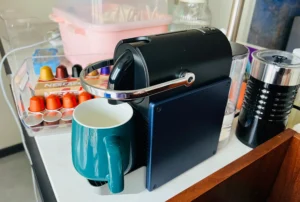
A perfect sample is reassuring. It looks right. The color is right. It drops into the machine smoothly and brews without leaking. Put ten more

A Good Presentation Is Not the Same as Good Evidence. A supplier’s website, catalog and sales presentation are useful starting points. They can tell you