
















Private Label vs OEM Coffee Capsules: What’s the Practical Difference
A buyer says they need private label coffee capsules. Another asks for OEM. A third uses both terms in the same email to describe exactly
As the coffee industry enters a new stage of development, conversations are shifting beyond harvest volumes and commodity prices. The International Coffee Organization (ICO) Annual Review 2024/25 highlights an industry increasingly shaped by sustainability, international cooperation, supply chain resilience, and long-term value creation. Although the report does not specifically discuss coffee packaging, many of its findings have direct implications for coffee brands, importers, and packaging manufacturers.
According to the report, global coffee production reached 177.5 million 60-kg bags in coffee year 2024, while global consumption reached 175.1 million bags. This resulted in a relatively small global surplus of approximately 2.4 million bags, compared with a deficit of 3.9 million bags the previous year. While the supply-demand balance has improved, the report makes it clear that the coffee industry continues to operate in a market where climate events, logistics, and geopolitical uncertainty can quickly change supply conditions.
One of the most significant developments highlighted in the Annual Review is the ICO’s growing role in international policy discussions. During 2024/25, the organization became an Observer to the United Nations General Assembly and actively participated in the G7-led Global Coffee Fund initiative. These developments reflect a broader recognition that coffee is no longer viewed simply as an agricultural commodity, but as an important industry linked to rural development, environmental sustainability, and international trade.
This shift also signals changing expectations throughout the supply chain. Governments, international organizations, coffee brands, and suppliers are placing greater emphasis on transparency, resilience, and responsible business practices than ever before.
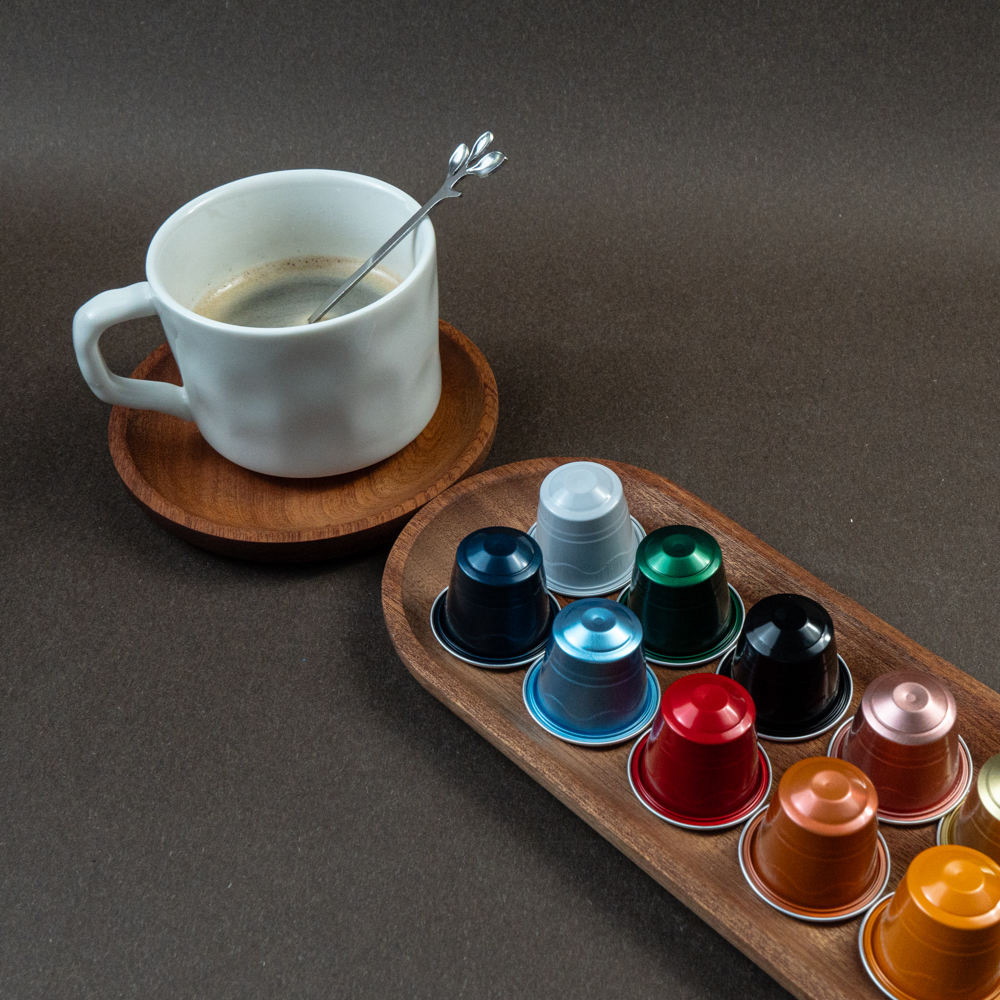
One of the strongest messages from the report is that stability has become a competitive advantage.
Coffee production is increasingly affected by extreme weather and climate variability. Even in a year where global production exceeds consumption, localized disruptions can still influence availability, prices, and purchasing decisions. The report notes that South America remains the world’s largest exporting region, accounting for approximately 44.7% of global coffee exports, while Asia and Oceania contribute around 31.9%. This concentration means that regional weather events can have global consequences.
For coffee brands, protecting product quality has become just as important as securing raw materials. Green coffee represents a significant investment, and preserving quality after roasting is essential for maintaining brand value.
Although packaging receives little direct attention in the ICO report, the industry’s changing priorities make its role increasingly important.
According to the Annual Review, green coffee accounted for 86.5% of global coffee exports during the first eight months of coffee year 2025/26, while soluble coffee represented 13.0% and roasted coffee just 0.5%. This illustrates that most coffee still travels long distances before reaching consumers, making product protection an important part of the supply chain.
For roasted coffee and coffee capsules, exposure to oxygen, moisture, and light can gradually affect aroma and freshness. For this reason, many premium coffee brands continue to invest in packaging solutions designed to help maintain product quality throughout transportation and storage.
According to European Aluminium, aluminum provides an effective barrier against oxygen, moisture, and light, making it widely used in food packaging applications where product protection is essential.
The ICO Annual Review suggests that the future coffee industry will place greater value on resilience, quality, sustainability, and long-term partnerships rather than short-term cost alone.
For coffee capsule manufacturers, this trend creates new opportunities. Coffee brands are increasingly looking for suppliers capable of delivering consistent quality, stable production, food-contact compliance, and reliable supply chains. Packaging is no longer viewed simply as a container—it has become part of the product experience and an important element of brand positioning.
As the coffee market continues to evolve, companies that combine high-quality products with dependable manufacturing and long-term cooperation are likely to be better positioned for future growth.
International Coffee Organization (ICO), Annual Review 2024/25: https://www.ico.org/documents/cy2025-26/annual-review-2024-2025-e.pdf

Kahve Kapsülü Üretim Uzmanı · Kervoo
2024'ten beri
A buyer says they need private label coffee capsules. Another asks for OEM. A third uses both terms in the same email to describe exactly
A perfect sample is reassuring. It looks right. The color is right. It drops into the machine smoothly and brews without leaking. Put ten more

İyi bir sunum, iyi bir kanıtla aynı şey değildir. Bir tedarikçinin web sitesi, kataloğu ve satış sunumu, faydalı başlangıç noktalarıdır. Bunlar size şunları anlatabilir: