
























Private Label vs OEM Coffee Capsules: What’s the Practical Difference
A buyer says they need private label coffee capsules. Another asks for OEM. A third uses both terms in the same email to describe exactly

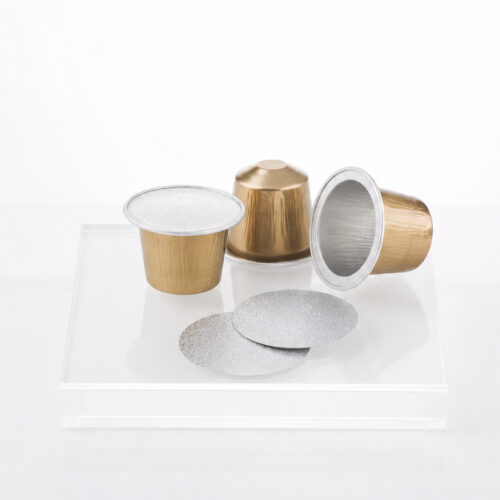
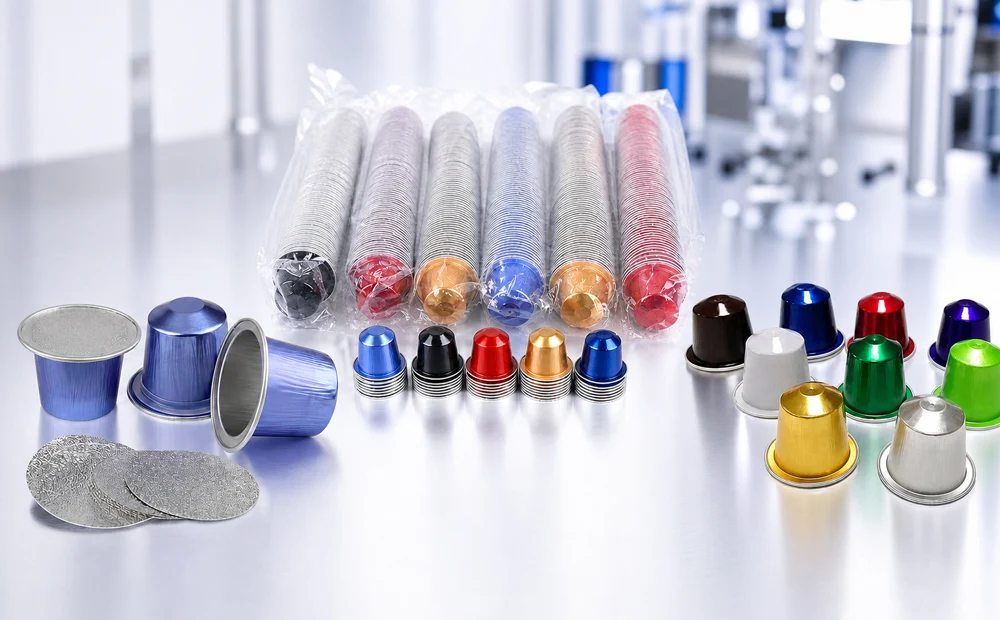
An empty aluminum coffee capsule looks like a simple part. Manufacturing one consistently is another matter.
Before a capsule reaches a filling company or coffee brand, the aluminum has already gone through a series of controlled manufacturing steps. The material has to be formed without unacceptable defects. The rim and other functional dimensions have to remain consistent. Food-contact surfaces need to be appropriate for their intended use. Color and branding have to be applied without losing sight of function. Then the finished capsules still need to survive nesting, packing and international transport.
The difficult part isn’t making one good-looking capsule.
It’s making the next 100,000 behave like the one the customer approved.
That distinction is worth understanding when evaluating an tillverkare av tomma kaffekapslar i aluminium. A production line may look impressive, but commercial manufacturing depends just as much on process control, repeatability and what happens between individual production stages.
The exact equipment and sequence vary by manufacturer and capsule design. Broadly, though, the process moves through material preparation, forming, food-contact surface treatment, finishing, inspection and protective packaging.
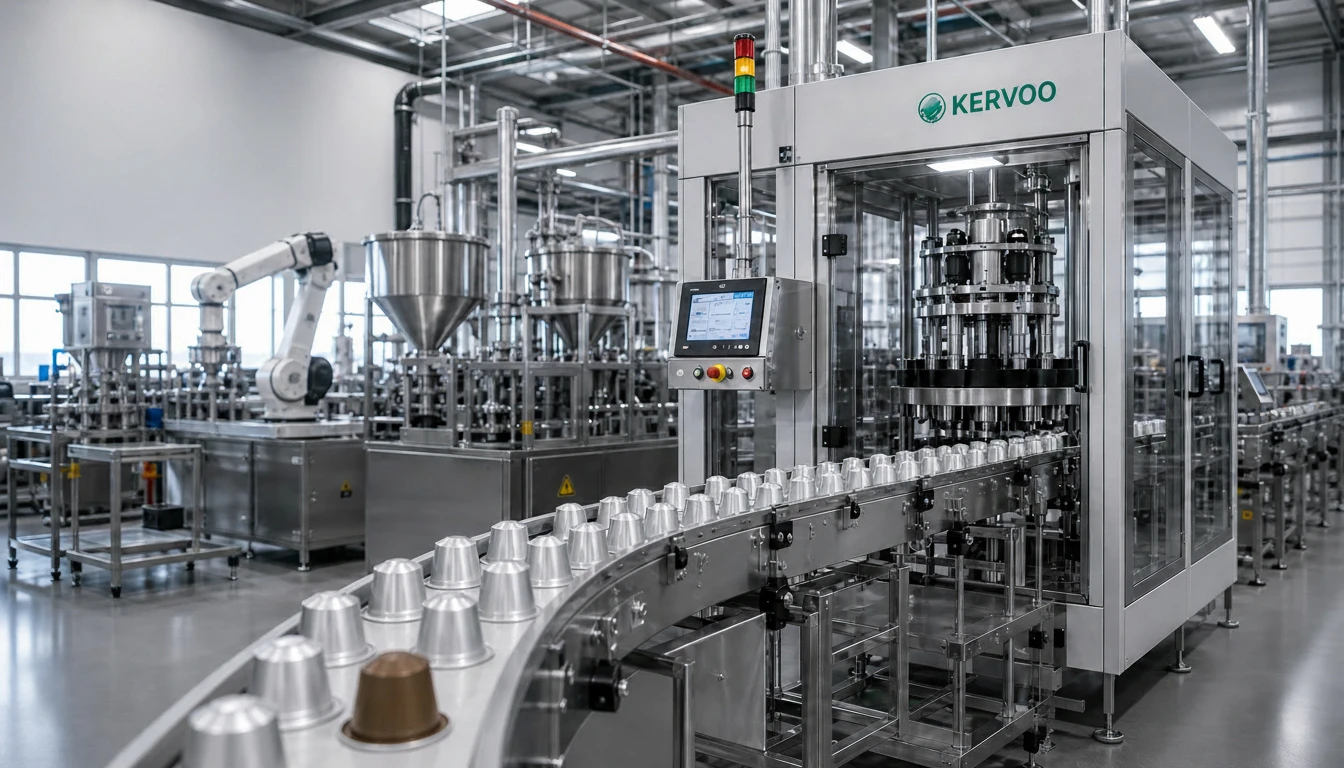
Manufacturing starts before the forming equipment begins to move.
The aluminum has to be suitable for both the intended packaging application and the forming process used to create the capsule. Formability matters because the material is being transformed from a relatively simple starting form into a small three-dimensional package.
During that transformation, the material needs to flow in a controlled way. Excessive thinning, cracking, unwanted deformation or other defects can affect the finished capsule.
For food packaging, material selection also needs to be considered in the context of food contact.
This is where terminology matters.
“Food-grade aluminum” is commonly used online, but it isn’t a single globally defined grade that automatically establishes suitability in every country. For professional buyers, the more useful question is whether the finished materials and surfaces are appropriate for their intended food-contact application and the relevant destination market.
That distinction becomes even more important once coatings and other finished surfaces are considered.
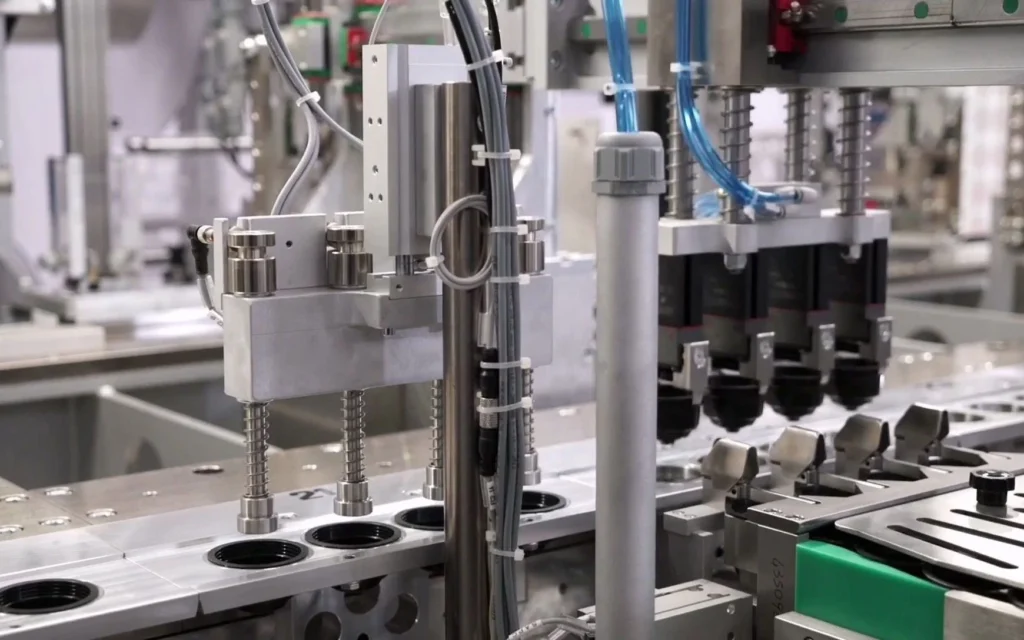
Forming is where aluminum begins to look like a coffee capsule.
Depending on the production method and product design, the material may go through one or more controlled forming operations to create the body, sidewall, bottom and rim geometry.
Reaching the correct overall shape is only part of the job.
The material has to distribute appropriately during forming. The capsule needs enough structural consistency for downstream handling. The rim has to be formed in a way that supports later sealing and machine interaction.
These details eventually affect operations that happen in another factory.
A filling company needs capsules to separate and position reliably. The sealing equipment needs a consistent interface. The brewing system later expects the finished capsule to interact with the machine in a predictable way.
That’s why forming quality shouldn’t be judged only by whether a capsule “looks right.”
A visually small difference can become a functional difference later.
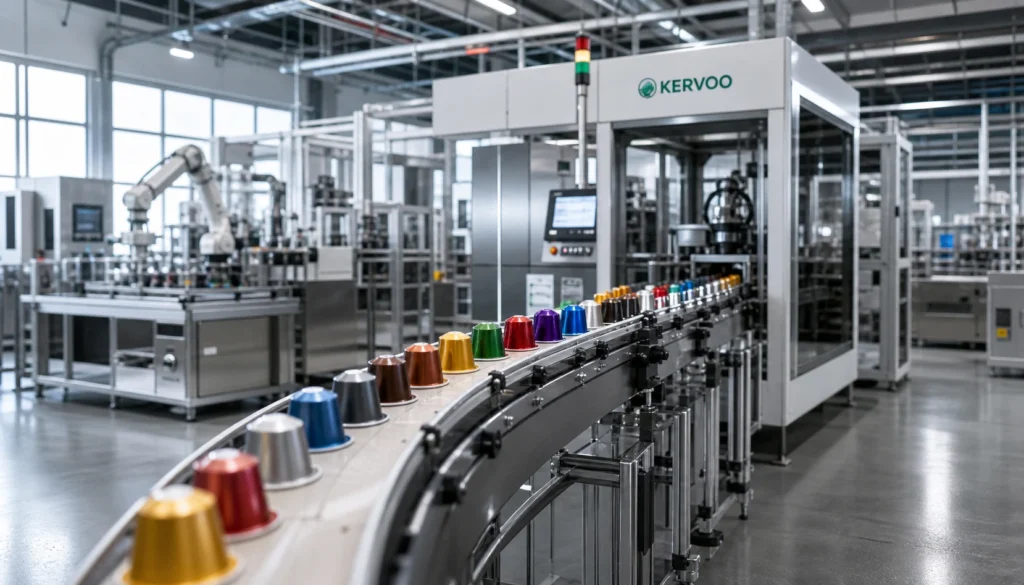
Coffee capsules are small, which makes certain dimensional details disproportionately important.
Overall height and diameter are easy to understand, but they aren’t the only measurements that matter. Rim geometry, body profile, bottom structure and the relationship between different dimensions can all influence downstream performance.
The rim is a particularly good example.
It occupies very little space, yet it participates in the sealing interface and can influence how the capsule behaves during handling and brewing.
A badly damaged rim is easy to identify.
Small variations are harder.
They may not appear during a quick visual check, but can later contribute to inconsistent sealing, positioning issues or unusual brewing behavior.
For buyers working with automated equipment, understanding coffee capsule dimensional specifications is therefore more useful than simply asking whether the capsule has “tight tolerances.”
The actual questions should be more specific:
Which dimensions are functionally important?
What requirements have been agreed?
And how does the manufacturer verify that production remains within them?
Without those answers, a tolerance number by itself doesn’t tell the buyer very much.
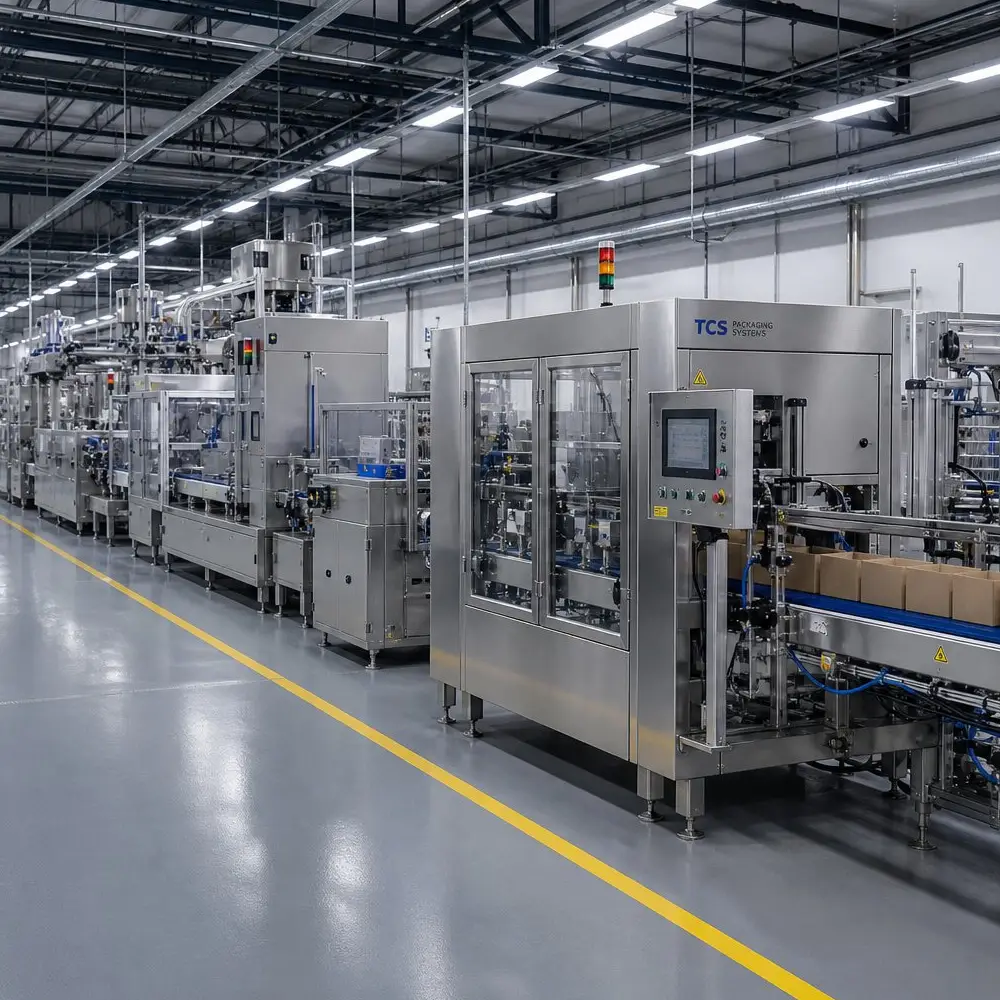
The aluminum body is only one part of the finished material system.
Depending on the capsule construction and manufacturing method, the internal surface may use a coating or lacquer that becomes part of the interface between the package and its contents.
That means the finished surface deserves attention in its own right.
Professional buyers don’t necessarily need to become coating chemists. They should, however, understand what materials are intended to contact the coffee and what documentation is available for the target application.
This is especially important for brands selling in multiple markets, because food-contact regulatory frameworks differ by jurisdiction.
In the European Union, Regulation (EC) No 1935/2004 establishes a general framework for materials and articles intended to come into contact with food. The United States handles food-contact substances through a different regulatory framework administered by the FDA.
For this reason, food-contact aluminum coffee capsules should be evaluated as finished packaging components rather than simply described by the underlying metal.
“It’s aluminum” isn’t a complete food-contact specification.
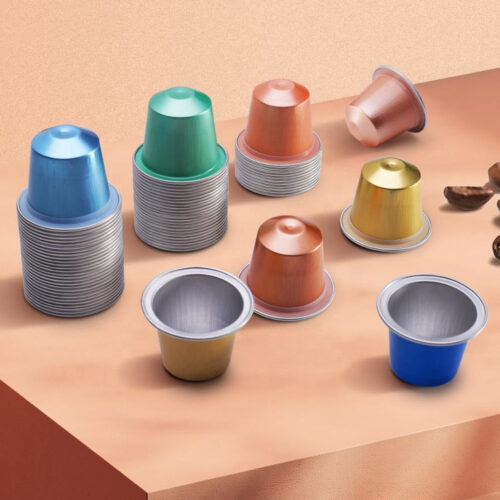
Color is often the most visible difference between two capsules.
From a manufacturing perspective, appearance has to work around function rather than replace it.
Depending on the actual production process, aluminum capsules can be given different colors and surface effects, followed by branding elements such as printing or embossing.
For commercial projects, the important distinction is between decorative customization and structural customization.
Changing a metallic finish to a matte finish is fundamentally different from changing the geometry or dimensions of the capsule.
The first affects appearance and production setup.
The second may affect filling equipment, sealing and brewing compatibility—and can require technical development or tooling.
At Kervoo, capsule-body options include metallic, matte and multi-color finishes, logo printing and bottom embossing. Projects involving different geometry or dimensions are subject to technical feasibility assessment.
The sequence matters: first establish what the capsule needs to do, then decide how it should look.
Final inspection is useful, but it comes late.
If a process has already produced a large quantity of non-conforming capsules, finding them only at the end isn’t particularly efficient.
That’s why manufacturing quality is better understood as a sequence of controls rather than one final inspection table.
Depending on the actual production process and agreed specification, relevant checks may cover areas such as:
The exact inspection method and frequency should match the manufacturer’s real quality plan. There is little value in inventing a universal inspection frequency for every capsule factory.
For a buyer, the useful questions are straightforward.
What gets checked during production?
How is a production lot identified?
What happens when a result falls outside the agreed requirement?
Can the manufacturer determine whether the problem is isolated or affects a wider batch?
How is that information used to prevent further production of the same issue?
This is what a meaningful Kvalitetskontrollprocessen för kaffekapslar should help a buyer understand.
Quality control is most useful when it prevents variation from becoming a shipment—not simply when it finds bad products at the end.
Once the capsules pass inspection, manufacturing isn’t quite finished from the buyer’s perspective.
The product still has to arrive in usable condition.
Empty aluminum coffee capsules are lightweight and can be nested efficiently, which helps with packing and transport. But poor handling, unnecessary compression or inadequate secondary packaging can still affect the rim or body geometry.
That creates an awkward situation: a capsule can leave the production process within specification and arrive at the filling company in a different physical condition.
For international orders, protection therefore needs to continue through the entire chain:
production → packing → warehouse → loading → international transport → local delivery → unpacking.
At Kervoo, standard aluminum capsule packing is 4,000 pieces per carton. Other logistical details such as carton dimensions, weight, pallet configuration and shipping method should be confirmed for the actual order.
Packaging isn’t separate from manufacturing quality when damage can change the product’s function.
The factory has controlled the geometry.
The packaging needs to preserve it.
Factory visits naturally draw attention to machines.
That’s understandable. Production equipment is visible, easy to photograph and easy to compare.
But some of the most important parts of manufacturing are less dramatic.
How is an approved specification translated into production?
How are dimensions monitored?
What happens when a process begins to drift?
Can the factory reproduce the same finish on a repeat order months later?
How are capsules protected after inspection?
After more than 10 years in aluminum coffee capsule manufacturing, we’ve found that these questions tend to tell buyers more than machine speed alone.
A production line creates the capsule.
The manufacturing system creates repeatability.
That distinction becomes more important as order quantities grow.

A coffee capsule buyer doesn’t need to become a metal-forming engineer.
But understanding the manufacturing logic makes supplier evaluation much easier.
Start with the material and finished food-contact surface.
Understand how the capsule geometry is created.
Pay attention to the dimensions that have a functional role rather than asking only for a generic tolerance figure.
Look at surface finishing as something that comes after functional requirements.
Ask how quality is controlled while production is running.
And consider whether the packaging can preserve the capsule condition all the way to your filling operation.
All of those questions lead back to one issue:
Can the manufacturer reproduce the approved product reliably at commercial scale?
That’s ultimately what professional empty aluminum capsule manufacturing is about.
Not making one good capsule.
Making the same good capsule again and again.
Vanliga frågor
How are empty aluminum coffee capsules formed?
Aluminum is shaped through controlled forming operations to create the three-dimensional capsule body, including the sidewall, bottom and rim. The exact process varies by product and manufacturer, but maintaining geometry consistently is critical for downstream filling, sealing and brewing.
Why is the rim important in coffee capsule manufacturing?
The rim participates in the sealing interface and can affect handling and brewing performance. Damage or dimensional variation in this area may contribute to sealing, positioning or extraction problems.
Do aluminum coffee capsules have an internal coating?
Depending on the product construction, aluminum capsules may use an internal coating or lacquer as part of the finished food-contact surface. Buyers should confirm the actual construction and relevant supporting documentation for their intended market.
Are all aluminum coffee capsules manufactured to the same dimensions?
No. Capsule geometry depends on the intended system and product design. Buyers should work from an approved specification and verify the dimensions that are functionally relevant to their application.
How can a buyer judge whether a capsule factory has good manufacturing control?
Look beyond individual samples. Ask how specifications are controlled, which characteristics are inspected during production, how production lots are identified, how non-conforming results are handled and how repeat-order consistency is maintained.
Industry Resources

Specialist på tillverkning av kaffekapslar · Kervoo
Sedan 2024
A buyer says they need private label coffee capsules. Another asks for OEM. A third uses both terms in the same email to describe exactly
A perfect sample is reassuring. It looks right. The color is right. It drops into the machine smoothly and brews without leaking. Put ten more

En bra presentation är inte detsamma som bra underlag. En leverantörs webbplats, katalog och säljpresentation är bra utgångspunkter. De kan ge dig information om