
























How a Custom Coffee Capsule Moves from Requirement to Production
“Custom coffee capsule” can mean two very different projects. For one buyer, it means taking an existing capsule and changing the color, adding a logo

“Custom coffee capsule” can mean two very different projects.
For one buyer, it means taking an existing capsule and changing the color, adding a logo and developing a branded lid.
For another, it means changing the capsule’s dimensions or geometry to suit a specific product or filling setup.
The first is primarily a customization project. The second is an engineering project.
That distinction should be made early because it affects almost everything that follows: technical review, tooling, sample development, testing, MOQ, cost and lead time.
A well-run development project therefore doesn’t begin with a mold.
It begins with a clear requirement.
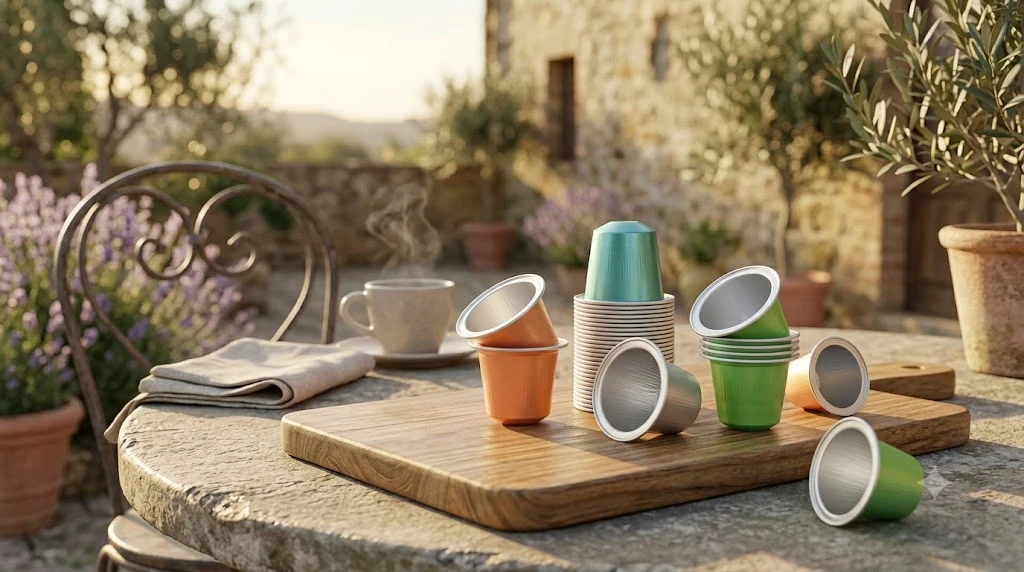
Before drawings or tooling are discussed, separate the project requirements into two groups.
What can remain standard?
And what genuinely needs to be different?
Typical customization requirements may include:
These items don’t require the same development work.
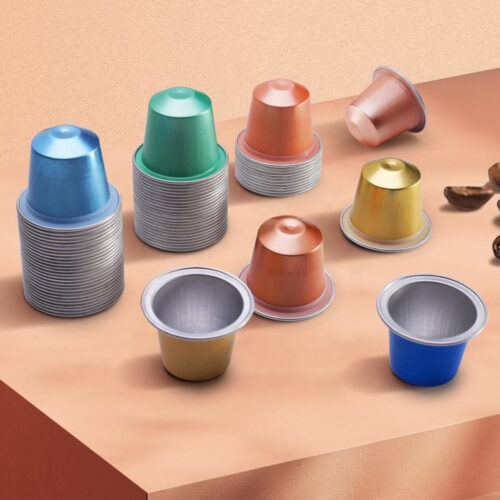
At Kervoo, existing capsule-body options include metallic, matte and multi-color finishes, logo printing and bottom embossing. Lid options include gloss, matte and woven-style finishes, with printing or custom embossing available depending on the project. PP, PE and bamboo fiber + PLA sealing-ring options are also available.
If those options meet the requirement, there may be no technical reason to redesign the capsule body.
Changes to dimensions or geometry are different. They require a technical feasibility review because they may affect forming, filling equipment, sealing and brewing performance.
A useful project brief should therefore specify the required outcome rather than simply stating:
“We need a custom capsule.”
Once the required changes are clear, the manufacturer can determine whether the concept is practical.
For structural development, several interfaces need to be considered together:
the brewing system,
the filling equipment,
the lid and sealing area,
the intended coffee dose,
the forming capability,
and the physical behavior of the finished capsule.
A dimensional change that looks minor on a drawing may affect several of these areas at once.
Increasing or reducing one dimension can alter how the capsule sits in filling equipment. Changing the rim may affect sealing. A different body profile may change nesting or feeding behavior.
Feasibility review is therefore intended to identify conflicts before money is committed to tooling.
If the design can’t work reliably in the intended production system, making a more detailed drawing doesn’t solve the underlying problem.
Once the concept is technically viable, it needs to become a controlled specification.
A drawing translates phrases such as:
“slightly wider”
“deeper cup”
“stronger rim”
into measurable geometry.
For a functional capsule, the drawing should focus on dimensions and features that matter to manufacturing and downstream use rather than adding unnecessary precision everywhere.
Nominal dimensions alone are not enough. Relevant tolerances also need to be defined so that production has an acceptable operating range.
This is where מפרט מידות של קפסולות קפה become central to development.
A drawing does two jobs.
It tells the manufacturer what to make.
And later, it gives both buyer and manufacturer a common reference for deciding whether production matches the approved design.
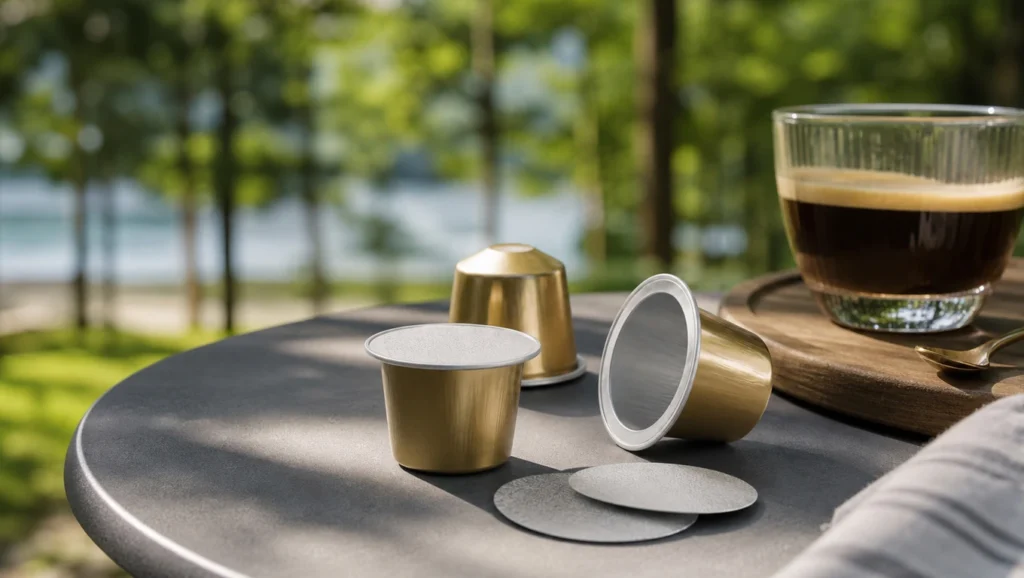
Not every custom coffee capsule requires a new mold.
Color changes don’t automatically require new forming tooling.
Neither does logo printing.
Many lid-design changes can also be handled without changing the capsule body’s forming tool.
New or modified tooling becomes relevant when the physical geometry itself changes beyond what the existing production setup can create.
Before tooling begins, the buyer and manufacturer should therefore confirm:
Tooling should follow a technically reviewed design.
Using tooling to discover what the design should have been is an expensive development method.
The first physical sample exists to test assumptions.
Does the geometry match the drawing?
Does the capsule fit the intended system?
Can it be handled by the filling equipment?
Does the lid seal correctly?
Does the finished capsule brew as intended?
The sample may reveal that a feature needs adjustment.
That’s normal in genuine product development.
Treating every sample revision as a failure encourages teams to skip useful validation. A better approach is to document what was tested, what was learned and what needs to change.
The important thing is controlled iteration.
Version 2 should exist because Version 1 taught the team something specific.
Not because everyone “felt like trying another shape.”
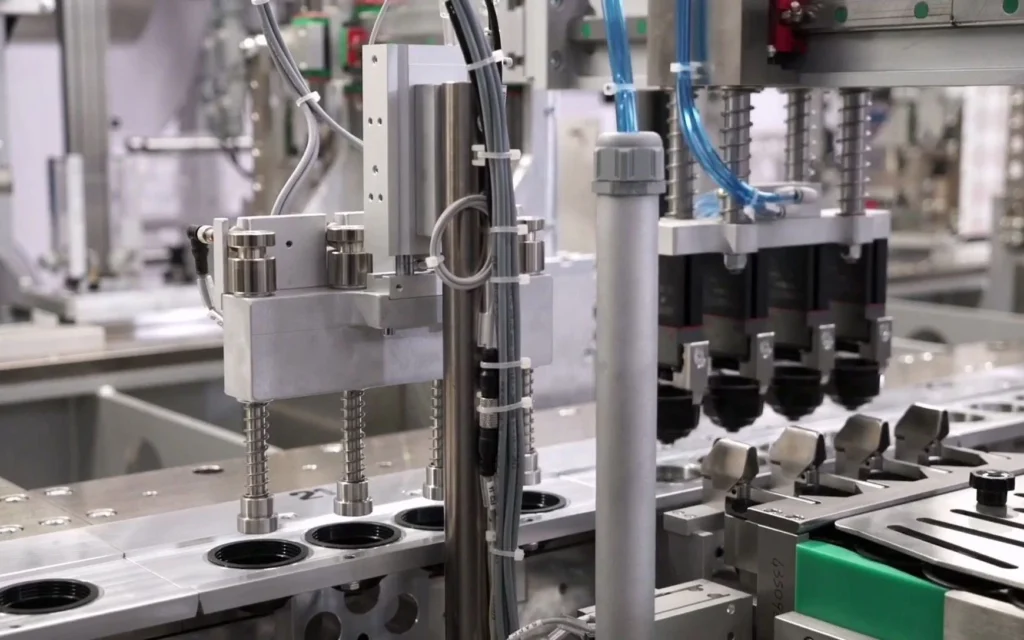
A custom capsule isn’t fully validated on a desk.
It needs to enter the real production and brewing environment.
Depending on the project, validation may include:
Not all problems discovered during testing are necessarily capsule-design problems.
Filling-machine setup may need adjustment.
The lid may be unsuitable.
Coffee grind or dose may affect brewing.
That’s why controlled testing matters. Keep unnecessary variables stable and investigate failures before redesigning the capsule.
For projects involving automated production, filling and packaging line compatibility should be confirmed before the design is frozen for volume manufacturing.
Once testing succeeds, the product needs a defined approved state.
For a custom capsule project, that may include:
If these elements remain ambiguous, “sample approved” isn’t a particularly strong production instruction.
Version control matters here.
The factory needs to know which drawing is current.
Purchasing needs to know which commercial configuration has been approved.
Quality teams need to know what they’re checking against.
And future repeat orders need a reference that survives longer than the memory of the people who developed the project.
A custom sample can perform correctly and still not be ready for high-volume production.
Before scale-up, the manufacturer also needs to confirm that the approved design can be produced consistently using the intended manufacturing process.
Questions include:
Does the tooling behave consistently?
Can the process hold the required dimensions?
Can the selected finish be repeated?
Can quality inspection measure the relevant characteristics?
Can packaging protect the finished product?
Does production at commercial scale introduce issues not seen during sample development?
This is where the project moves from product development into process validation.
The design has already answered:
“Can this capsule work?”
Production now needs to answer:
“Can we keep making it this way?”

Engineering development isn’t separate from purchasing.
A structural custom project may involve:
tooling,
more sample iterations,
additional testing,
longer preparation,
and a production quantity that supports dedicated manufacturing.
At Kervoo, standard aluminum capsules can start from one carton of 10,000 pieces when stock is available.
Customized OEM projects using established product platforms generally become more practical from around 100,000 pieces per design.
A genuinely new structural development needs to be evaluated separately because tooling, validation and production requirements depend on the project.
This is why a buyer shouldn’t ask for the final MOQ and unit price before the technical scope is clear.
The manufacturer can’t accurately price an engineering project that hasn’t yet been defined.
A large part of custom development is deciding what not to customize.
If an existing capsule already works with the brewing system and filling line, changing its geometry simply to make the project feel “more custom” adds risk without necessarily adding customer value.
The more useful custom features are the ones tied to a clear requirement.
A brand needs a specific appearance.
A filler needs a technical change.
A lid needs a different feature.
A new application can’t be served by the existing format.
After more than 10 years manufacturing aluminum coffee capsules, we’ve found that development tends to move faster when the project begins with the problem rather than the requested solution.
“Change this dimension” gives us an instruction.
“This capsule doesn’t position correctly in our equipment” gives us a problem to solve.
The second conversation often leads to a better design.
Custom capsule development doesn’t need to be complicated for the sake of being technical.
Each stage has a straightforward purpose.
Requirement:
What does the buyer actually need?
Feasibility:
Can it be manufactured and used reliably?
Drawing:
How is that requirement defined and measured?
Tooling:
What production hardware is required?
Sample:
Does the physical product match the assumptions?
Testing:
Does it work in the actual filling, sealing and brewing system?
Approval:
What exact version are both sides accepting?
Production validation:
Can that approved version be manufactured consistently?
Mass production:
Can the process repeat the result at commercial volume?
If one stage hasn’t answered its question, moving to the next stage usually doesn’t remove the uncertainty.
It just makes that uncertainty more expensive.
שאלות נפוצות
Does every custom coffee capsule require a new mold?
No. Colors, surface finishes, logo printing, many embossing applications and lid customization may use an existing capsule platform. New or modified tooling becomes more relevant when the capsule’s physical geometry or dimensions need to change.
What information should I provide for a custom capsule project?
Start with the intended brewing system, filling equipment, reason for customization, required geometry or dimensions, lid requirements, expected volume, target market and any existing drawings or reference samples.
Can I provide an existing capsule as a reference?
Yes. A physical reference can be useful for understanding geometry and application, but the development still needs controlled specifications and testing rather than relying on the sample alone.
How many sample rounds does custom capsule development require?
There is no universal number. A project may be approved quickly if the first design works, while structural changes can require several iterations. Each revision should be based on a specific test result or technical requirement.
When is a custom capsule ready for mass production?
When the approved specification has been defined, relevant tooling and manufacturing processes are stable, functional testing is satisfactory, and the manufacturer has shown that the required characteristics can be reproduced consistently.

מומחה לייצור קפסולות קפה · Kervoo
מאז שנת 2024
“Custom coffee capsule” can mean two very different projects. For one buyer, it means taking an existing capsule and changing the color, adding a logo

A trial order arrives. The capsules look good. Production runs. The coffee brews correctly. No major complaints come back. So, is it time to order
כאשר קונים שואלים על כמות ההזמנה המינימלית (MOQ) של קפסולות קפה בייצור OEM, הם לרוב מצפים לשמוע מספר אחד פשוט. 10,000 יחידות? 20,000 יחידות? 50,000 יחידות? הבעיה היא