













Private Label vs OEM Coffee Capsules: What’s the Practical Difference
A buyer says they need private label coffee capsules. Another asks for OEM. A third uses both terms in the same email to describe exactly
A buyer says they need private label coffee capsules.
Another asks for OEM.
A third uses both terms in the same email to describe exactly the same project.
None of this is particularly unusual.
In international sourcing, “private label” and “OEM” are often used loosely, and different suppliers don’t always define them in exactly the same way. That makes arguing over the terminology less useful than understanding what the buyer actually expects the manufacturer to do.
Does the brand want an existing capsule with its own packaging?
Does it need a custom color?
Should the logo be printed on the capsule or lid?
Is the manufacturer expected to change dimensions or develop something technically different?
Who handles the coffee filling?
Those questions reveal much more about the project than the label attached to it.
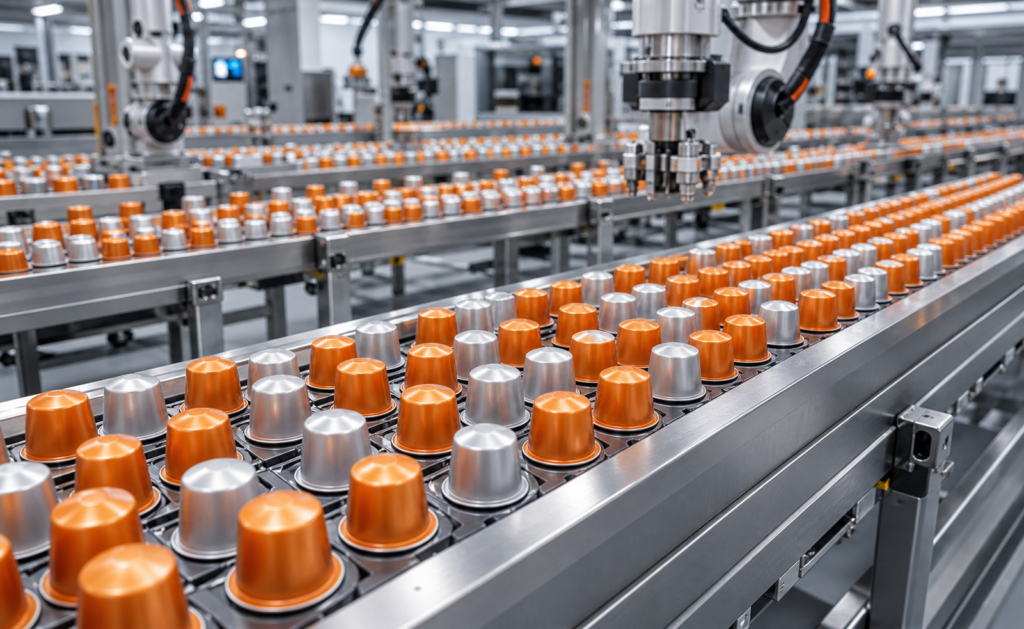
For that reason, the practical difference between private label and OEM coffee capsules is best understood as a difference in development responsibility and customization depth—not as two rigid industry definitions.
Private label generally starts with a product that can already be manufactured.
The buyer’s brand is then applied to that product in some form.
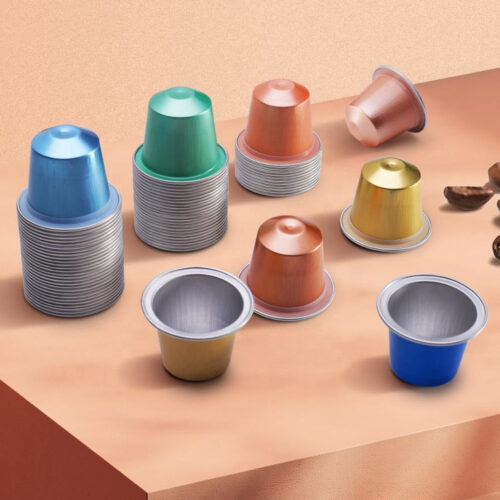
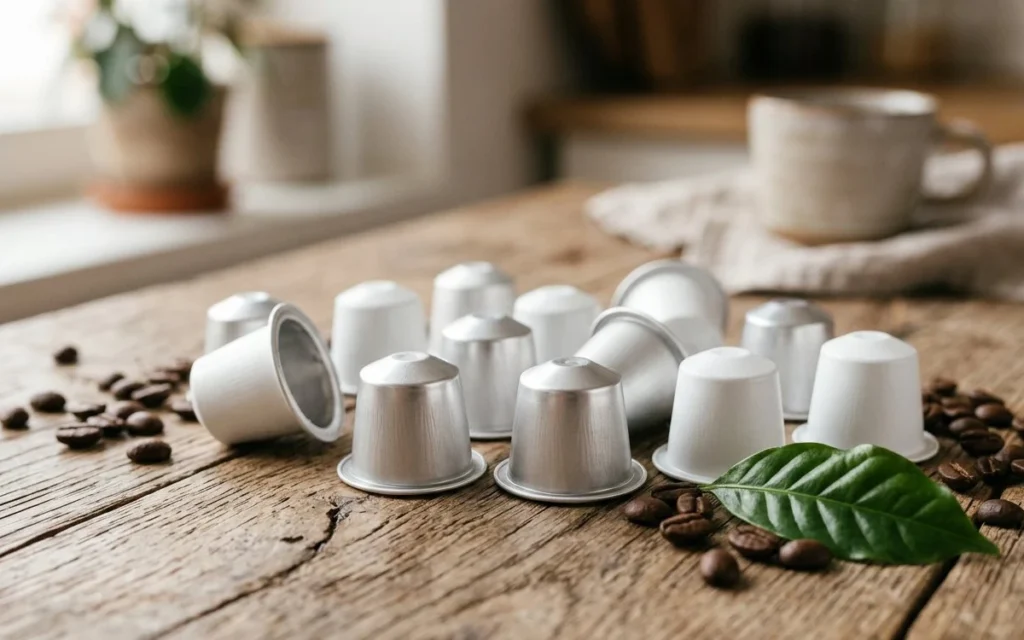
For coffee capsules, this can mean selecting an existing compatible capsule and building the brand around elements such as color, lid design and retail packaging.
The product itself doesn’t necessarily need to be newly engineered.
That’s an important distinction.
A coffee company entering the capsule category may already know which system it wants to support and may not need a new capsule geometry. What it needs is a reliable existing product that can carry its brand identity.
In this type of project, private label coffee capsules can provide a relatively direct route from an existing product platform to a branded commercial product.
How much the manufacturer provides beyond the empty capsule varies significantly, though.
Some suppliers may provide only branded components.
Others may support packaging.
Others may coordinate additional stages.
That’s why “private label” should always be followed by another question:
“What exactly is included?”
OEM is commonly used when a manufacturer produces according to requirements defined by another business.
In coffee capsules, that can range from relatively straightforward customization to much deeper product development.
A buyer may want:
These requirements don’t all carry the same engineering weight.
Changing a color is fundamentally different from changing capsule dimensions.
Printing a logo isn’t the same project as developing tooling.
This is why an OEM aluminum coffee capsule project needs to define the customization item by item instead of treating “OEM” as one fixed service package.
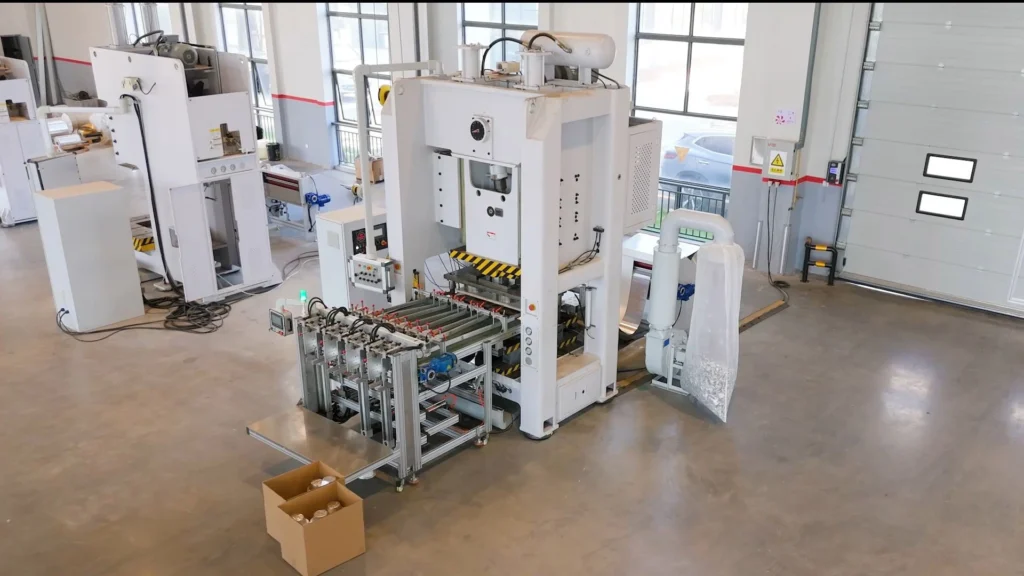
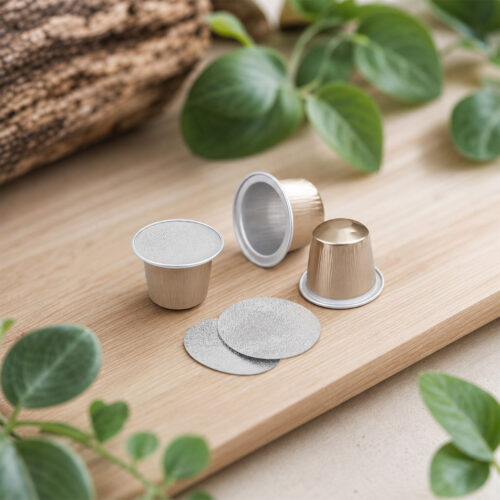
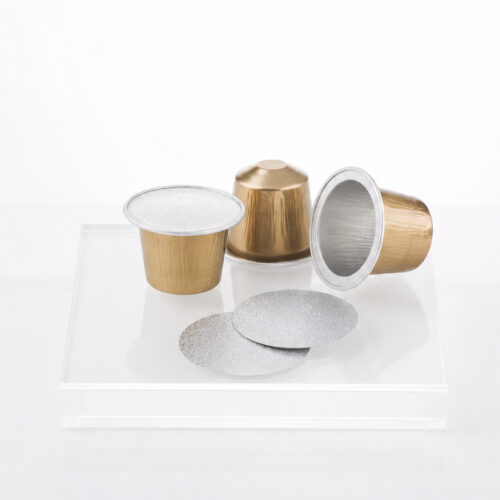
At Kervoo, for example, existing customization capabilities include metallic, matte and multi-color capsule finishes, logo printing and bottom embossing. Lid options include gloss, matte and woven-style textures, with printing or custom embossing depending on the project. Sealing-ring options include PP, PE and bamboo fiber + PLA solutions.
Custom geometry or dimensions require a separate technical feasibility assessment.
That’s OEM in practical terms: the manufacturer is working toward a more specific buyer-defined product rather than simply placing a brand onto a standard item.
A useful way to separate private label and OEM is to look at the starting point.
Private label often starts here:
“We like this existing product. How can we sell it under our brand?”
OEM often starts closer to:
“This is the product we want. How can you manufacture it for us?”
There’s plenty of overlap between the two.
A private label project may use custom colors and printed lids.
An OEM project may still rely heavily on an existing capsule platform.
That’s why the distinction is better thought of as a spectrum than a line.
At one end:
Existing product
→ standard components
→ branded packaging
In the middle:
Existing capsule
→ custom color
→ logo
→ custom lid
→ branded packaging
Further toward development:
Defined buyer requirements
→ technical evaluation
→ possible tooling
→ testing
→ approval
→ dedicated production
The further a project moves toward the last scenario, the more development time, validation and production planning it usually requires.
This distinction saves a lot of time early in a project.
If the buyer’s main goal is visual differentiation, there’s usually no reason to redesign a technically proven capsule from scratch.
Brand identity can be built through several layers:
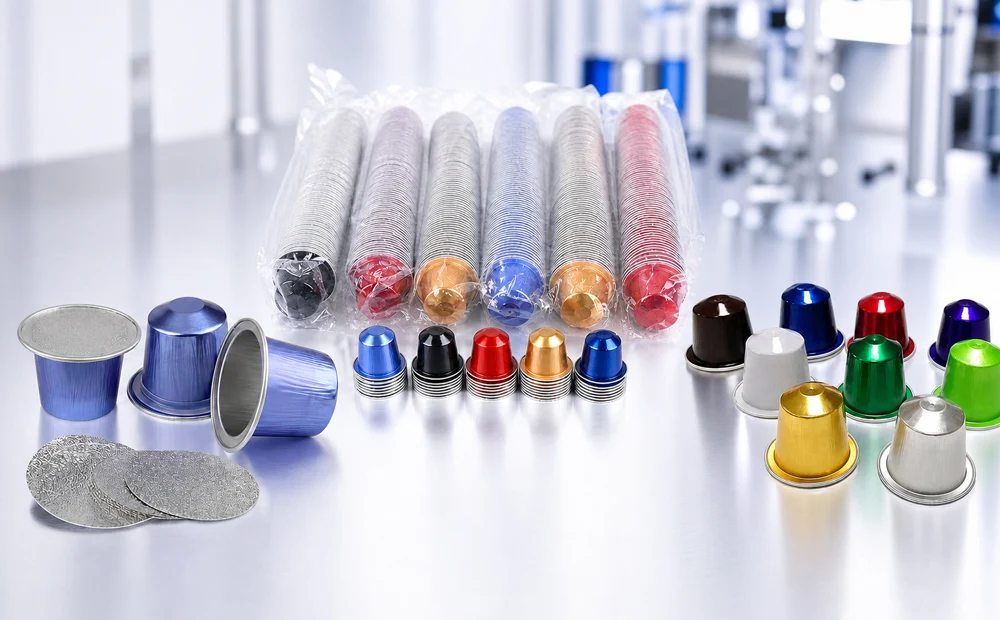
Capsule color.
Surface finish.
Logo.
Lid.
Retail packaging.
For many coffee brands, that is already enough to create a distinctive product.
A branded coffee capsule solution can therefore sit somewhere between basic private label and more technically involved OEM development.
The commercial question should be:
“What needs to be unique for customers to recognize this as our product?”
Not:
“How many things can we customize?”
Every additional custom element introduces something else that has to be approved, produced, controlled and potentially held in inventory.
Customization has value when it serves the brand.
Complexity by itself doesn’t.
This is where the distinction becomes very practical for purchasing teams.
A standard product already sitting in stock can be supplied in relatively small quantities.
Dedicated custom production can’t always work the same way.
Why?
Because custom projects create setup.
Colors may need preparation. Printing has to be arranged. Dedicated lids may have their own production requirements. Packaging can introduce another MOQ. Structural changes may require tooling.
These activities create costs before the first saleable unit comes off the production line.
At Kervoo, standard aluminum capsules can start from one carton of 4,000 pieces when stock is available.
For customized OEM projects, around 20,000 pieces per design is generally a more practical production starting point.
That doesn’t mean every private label order is 4,000 pieces or every OEM order is exactly 20,000.
It means the level of customization affects the economics of the production run.
A buyer should therefore ask for MOQ after defining the product—not before.
This question is often more useful than debating terminology.
In a straightforward private label project, the manufacturer may already have a defined capsule product, while the buyer makes decisions around branding, SKU structure and packaging.
In a deeper OEM project, the buyer may define more technical requirements and participate more heavily in approval and validation.
That changes responsibilities.
Someone needs to approve:
The deeper the customization, the more important it becomes to establish who approves what.
Otherwise, both parties can make perfectly reasonable assumptions that happen to be different.
For eksempel:
The buyer thinks the supplier will choose the appropriate lid.
The supplier assumes the customer has already specified one.
Nobody discovers the gap until sample testing.
Clear responsibility is boring.
It’s also much cheaper than unclear responsibility.
Private label can be particularly attractive for businesses that don’t need to reinvent the capsule.
A roaster may want to add capsules to an existing coffee range.
A distributor may be testing a new retail segment.
A smaller coffee company may want to validate market demand before investing in more extensive customization.
An established brand may also deliberately choose private label because the existing product already meets its technical needs.
That’s an important point.
Private label isn’t simply a “beginner” option.
Choosing an established product platform can be a strategic decision to reduce development complexity.
It can allow teams to spend more time on coffee, packaging, market positioning and sales rather than engineering a packaging component that doesn’t need to be unique.
There are also projects where the standard platform isn’t enough.
The brand may need a distinctive visual system across several SKUs.
A filling company may have specific equipment requirements.
The capsule may need a different structural feature.
A custom lid or sealing solution may be central to the project.
In those cases, OEM provides more room to define the product around the application.
But deeper customization also means more decisions.
More samples.
More validation.
Potentially more tooling.
And usually more need for volume planning.
The trade-off isn’t simply:
Private label = cheap
OEM = expensive.
A better way to think about it is:
Private label tends to reduce product-development complexity.
OEM gives the buyer greater product control.
The business needs to decide which one it values more for this particular product.
Private label and OEM don’t have to be permanent choices.
A brand can start with a relatively standard capsule to test the market.
Once sales become predictable, it may introduce custom colors.
Later, printed capsules or custom lids.
Eventually, a mature product line may justify deeper OEM development.
The opposite can happen too.
An established company may decide that simplifying a product brings more value than maintaining unnecessary customization.
This is why coffee capsule product launch planning benefits from thinking in stages.
You don’t necessarily need to make every branding and engineering decision before the first sale.
Sometimes the right first product is the one that teaches you what the second product should become.
The word a buyer uses in the first email rarely tells us enough about the project.
“Private label.”
“OEM.”
“Custom capsules.”
They’re useful starting points, but the manufacturing conversation only becomes clear when we know what needs to change.
If the buyer needs a standard capsule with a different color and branded packaging, that’s one type of project.
If dimensions need to change, that’s a very different one.
After more than 10 years of aluminum coffee capsule manufacturing, we’ve found that defining the individual custom requirements early usually saves more time than trying to agree on the perfect label for the project.
So instead of beginning with:
“Is this private label or OEM?”
We usually get more value from:
“What do you want to keep standard, and what needs to become yours?”
Once that’s clear, the rest of the project becomes much easier to define.
For most coffee businesses, the goal isn’t to choose the model with the most customization.
It’s to choose the model that supports the product without adding unnecessary complexity.
If an existing capsule already meets the technical requirements and your differentiation comes mainly from coffee, color and packaging, private label may be enough.
If the product itself needs specific design, material, component or structural requirements, OEM may be the better fit.
And if you’re somewhere between those two?
That’s normal.
Define the product first.
Then decide what to call the project.
The terminology can follow the manufacturing reality—not the other way around.
Ofte stillede spørgsmål
Are private label and OEM coffee capsules the same thing?
Not necessarily. The terms are often used inconsistently across suppliers. In practice, private label commonly starts with an existing product that receives the buyer’s branding, while OEM may involve deeper customization or buyer-defined product requirements. There is significant overlap.
Is private label only suitable for small coffee brands?
No. Established brands may also choose private label when an existing capsule platform already meets their technical requirements and custom engineering would add little commercial value.
Does OEM always require a new capsule mold?
No. OEM can include color, printing, embossing, lids and packaging without changing capsule geometry. New tooling becomes more relevant when structural or dimensional changes are required, subject to technical feasibility.
Which usually has a lower MOQ, private label or OEM?
Standard or lightly customized products often support lower quantities than dedicated custom production. At Kervoo, standard stock products can start from 4,000 pieces per carton, while around 20,000 pieces per design is generally a more practical starting point for customized OEM projects.
Can a brand start with private label and move to OEM later?
Yes. This can be a practical way to validate demand before investing in deeper customization. As sales and product requirements become clearer, additional custom features can be introduced.

Specialist i fremstilling af kaffekapsler · Kervoo
Siden 2024
A buyer says they need private label coffee capsules. Another asks for OEM. A third uses both terms in the same email to describe exactly
A perfect sample is reassuring. It looks right. The color is right. It drops into the machine smoothly and brews without leaking. Put ten more

En god præsentation er ikke det samme som gode beviser. En leverandørs hjemmeside, katalog og salgspræsentation er nyttige udgangspunkter. De kan give dig oplysninger om